
Start with today’s promises. Spend the middle of the meeting on exceptions that could change those promises. Finish with a name and a check-back time for each decision. Here is a ten-minute agenda a production manager can run from the board.
Minutes 0–2: today’s promises
Read the deliveries due today and identify the stage each repair still has to clear. Check who is out and which drop-offs need attention. If a repair is in Paint with a 5 p.m. pickup, ask the painter and reassembly lead what must happen before the advisor confirms the time.
Minutes 2–6: what could stop delivery?
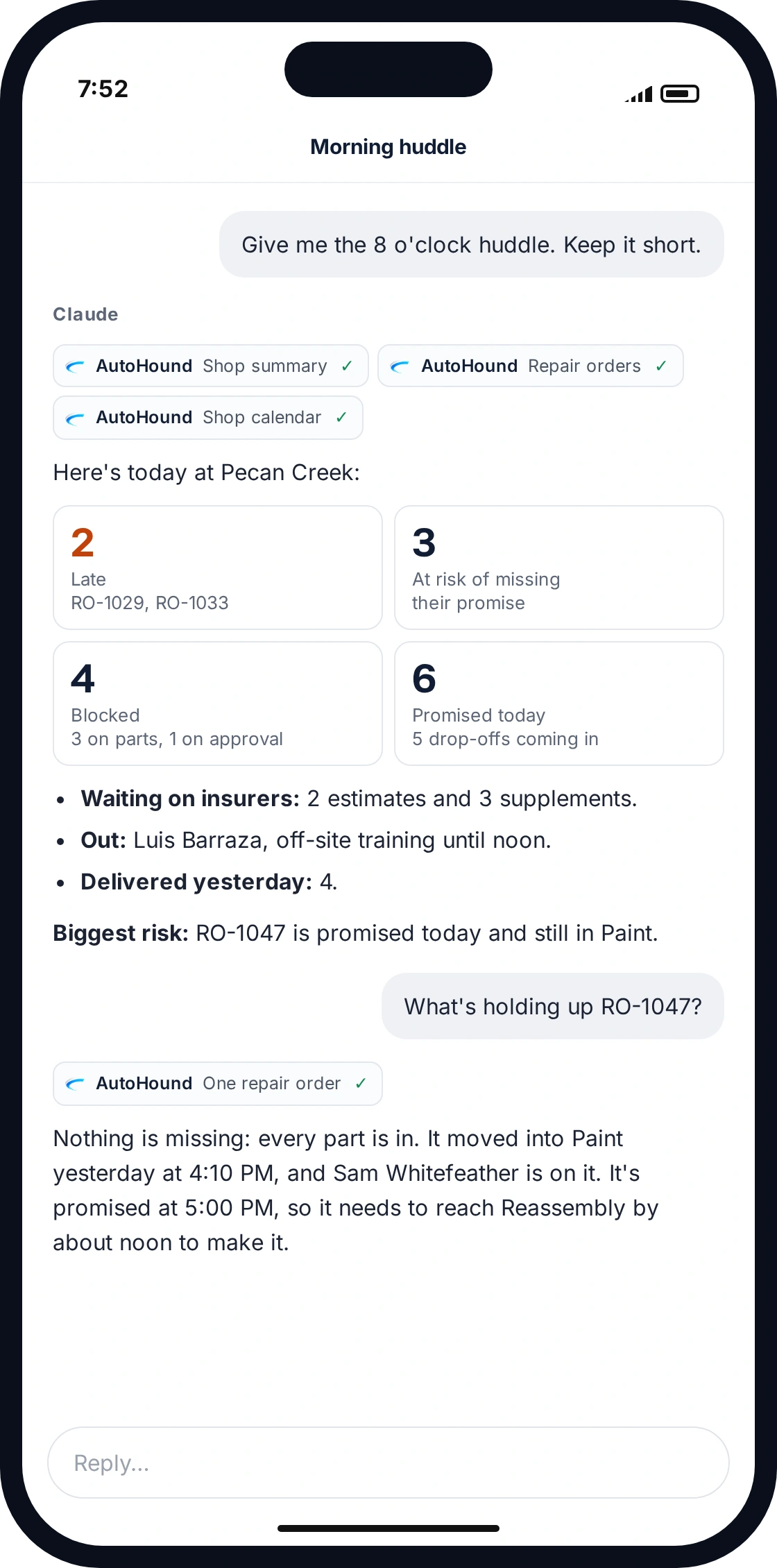
Start with a short list of exceptions. In the sample huddle, six repairs are promised today and four repairs are blocked across the shop. Three are waiting on parts and one on approval. These groups can overlap. Open the actual repair to see whether a particular blocker threatens a delivery today. Have the parts lead confirm the ETA and the advisor check the outstanding decision.
Minutes 6–9: give each decision an owner
For the repair still in Paint, the production lead agrees to check the handoff at noon. The advisor owns the customer update after that check. For a wrong mirror, the parts lead calls the supplier and records a replacement ETA. A single owner and a time are easier to follow up on than a general promise that the team will look into it.
Minute 10: read back the commitments
Read out the RO, next action, owner and check-back time. Write the commitments on the repair records the team will use through the day. A connected office user can ask Claude or ChatGPT for the opening huddle from the shop summary, calendar and ROs, then ask about one repair. Verify current conditions with the team before promising a pickup.
Huddle handoff sheet
Use one sheet per meeting.
- Deliveries promised today
- Repair at risk and present stage
- Decision or part needed
- Person taking the next action
- Check-back time and customer update owner